News — Trade
Week Ahead: Diesel, Potash and Feed Markets
A look at diesel inventories, Middle East oil flows, Belarus potash talks, natural gas and USDA reports shaping fertilizer and feed markets this week.
Quiet Quitting: This Is Not Big Farms Eating Small Farms

Large operations fail loudly—in court filings, closure announcements, and headlines. Small farms, family farms, and retiring farmers are more likely to quit quietly.
Washington Hay Production Decline: Drought, Strong Dollar, and Shifting Markets (2000–2024)

Washington hay production has fallen nearly 25% since the early 2000s, a decline driven by both drought and economics. This chart traces that shift, showing how repeated years of severe drought and a strong U.S. dollar since 2022 have squeezed growers from two sides—reducing yields at home and pricing out key export buyers abroad. As traditional export markets weaken, Washington’s hay industry is steadily pivoting toward higher-value domestic markets, where resilience, efficiency, and quality matter more than sheer tonnage.
Trading Hay - Exchange Rates
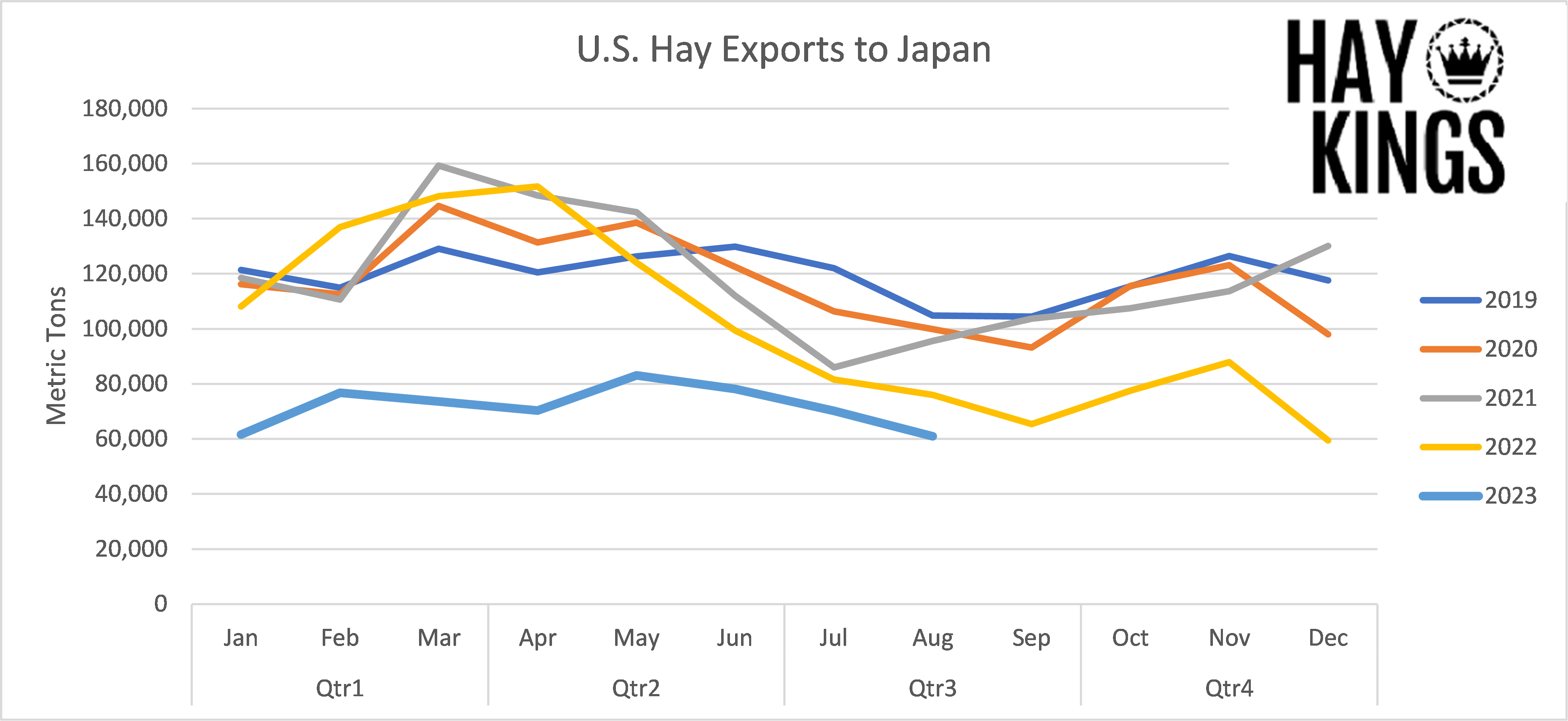
Hay Exports to South Korea - USDA Misses the Mark

Hay Kings is calling on the USDA FAS to issue a report discussing factors affecting demand for U.S. hay in the largest export destinations: China, Japan, South Korea, Taiwan, Saudi Arabia and the UAE. Additionally, the USDA AMS should recognize that exchange rates are always important to agricultural exports, market structures are complex and the hay industry is based on long-standing interpersonal relationships.